QR Codes on Bikes for Apartment Marketing: A Test Plan
Test an on-bike QR campaign with a parked-bike scan check, a defined qualified inquiry, and booked-tour attribution before expanding the fleet graphics.
By Kyle Sheker, Founder · October 16, 2026 · 9 min read
By Kyle Sheker
Leasing teams in lease-up need to know which marketing touchpoints produce relevant inquiries, not just which look good in a photo. Using QR codes on bikes for apartment marketing creates a proposed path from a parked, branded bicycle to a property landing page. Treat that path as a channel to test, not proof of better leads or faster leasing.
The decision is narrow: should the property approve an on-bike QR campaign, revise its design, or hold it until measurement works? The checklist below connects the printed graphic to a qualified inquiry and a recorded tour booking without relying on resident ride-location data.
Can QR codes on bikes support apartment marketing?
A marketing QR code can direct someone who sees a parked branded bike to property information or a tour-request page. Whether that visit becomes a qualified inquiry or a booked tour must be measured at the property.
Choose a destination that matches the invitation printed beside the code. A label that says “Explore apartments” should lead to apartment information, while “Schedule a tour” should lead to the property's actual booking process. Avoid sending every scan to a general homepage and expecting prospects to find the promised information themselves.
Property Pedal provides property-branded, standard non-electric bicycles through its multifamily bike share program. Confirm any proposed marketing QR graphics, landing-page work, and campaign reporting separately rather than assuming they are included with property branding.
Keep marketing instructions distinct from resident bike-access instructions. Someone researching an apartment should not be directed into a resident access workflow, and a resident trying to start a ride should not encounter a leasing form instead.
How does visual storytelling influence prospect decisions?
Use the bicycle and landing-page imagery to show the amenity being offered, rather than asking prospects to interpret a feature list. Treat any effect on recall or leasing decisions as something to evaluate, not an established advantage over text-only listings.
For example, pair a photograph of the property's actual fleet with a short explanation of resident access and the designated return space. If the fleet has not been installed, label a mockup as a proposed arrangement rather than presenting it as an existing amenity.
Keep the visual promise consistent with the service. Do not show electric bicycles for a standard-bike offering, advertise unrestricted returns, or use a photograph that suggests public bike rental when the page is describing a residential amenity.
Why is the mobile billboard effect important?
A branded bicycle can display the property's name away from the building. That potential visibility is not the same as a measurable inquiry or evidence that bikes outperform traditional signage.
Design the QR invitation for a stationary bicycle, not for someone trying to scan a passing rider. Test whether the property name and invitation remain readable when the bike is parked among other bicycles, with the rack and adjacent bikes in their normal positions.
Do not build the campaign around directing residents along promotional routes. The bicycle remains a resident amenity; the marketing test should work around its ordinary use rather than turning residents into campaign staff.
How do QR codes improve lead quality?
QR codes do not establish lead quality by themselves; they provide a route to information and an inquiry process. Evaluate quality using a definition agreed with leasing, then connect qualifying inquiries to booked tours where your systems support that attribution.
Use the following campaign measurement checklist before printing the full set of graphics. These are recommended testing steps, not claims about included Property Pedal software capabilities.
1. Create a tagged landing-page URL.
Start with the property's actual apartment or tour-page URL and add campaign tags that distinguish the bike graphic from other marketing placements. An illustrative parameter set is utm_source=bike&utm_medium=qr&utm_campaign=fleet_test&utm_content=frame_label.
Record the complete destination URL, campaign name, graphic version, and person responsible for maintaining the page. Keep names consistent in the QR service, website reporting, and leasing records. If different placements are being compared, give each a distinct content label rather than combining them before review.
2. Run a parked-bike scan test.
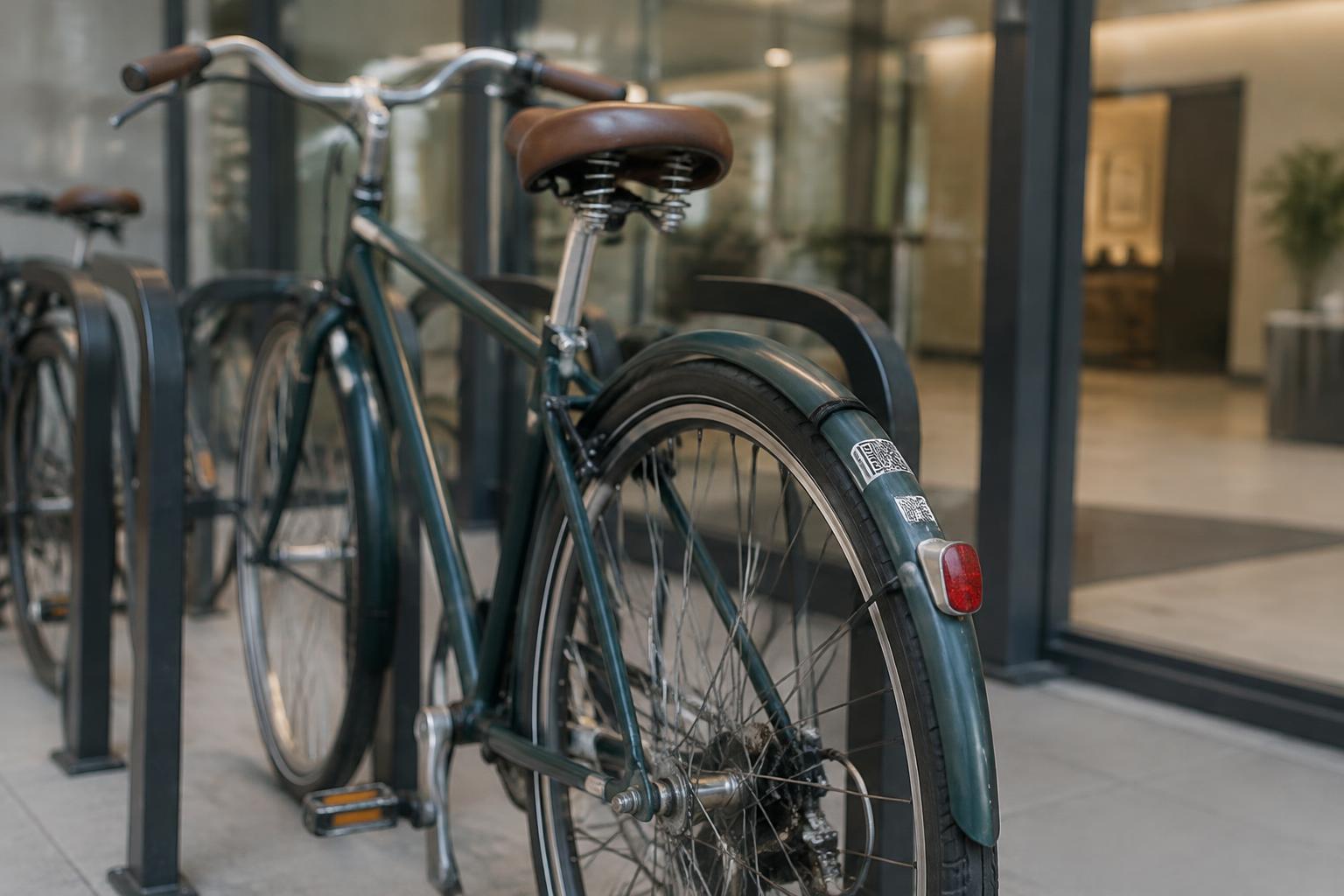
Test a printed sample on the proposed bicycle surface, with the bike parked in its intended position. Check whether racks, neighboring bicycles, glare, curvature, or the label's orientation interfere with scanning.
Use the phones your team has available and record the conditions tested. Follow the link through the landing page and inquiry process, not just to the first screen. Do not approve the artwork solely because the code scans from a computer monitor.
3. Define a qualified lead before reviewing results.
Use the property's established qualification criteria consistently across marketing channels. A suggested operational definition is a new prospect whose stated move timing and preferred floor plan match current availability and who requests leasing follow-up.
Document the definition and who applies it. A scan, a resident looking at the graphic, or an incomplete form should not automatically count as a qualified lead. Do not introduce different qualification standards merely to make the bike campaign appear stronger.
4. Test how booked tours will receive campaign attribution.
Ask the marketing or website team to confirm whether the campaign source can be retained in the inquiry record and carried into the booking system. Complete a clearly labeled test inquiry and booking, then verify that leasing can find both the campaign source and appointment status.
If the booking system does not preserve the source, define a manual fallback before launch. For example, leasing can record a prospect's answer to “How did you hear about us?” as a self-reported bike source. Keep that separate from attribution supported by the tagged website journey; neither method should be presented as perfect coverage.
5. Separate campaign activity from leasing outcomes.
Keep distinct counts for recorded campaign visits, submitted inquiries, qualified inquiries, booked tours, and completed tours where those records are available. Exclude identifiable staff tests and remove duplicate prospect records using the property's established process.
Do not substitute QR-service scan counts for unique prospects. Likewise, a booked tour is not a completed tour, and neither is a signed lease. If a reporting field is unavailable, mark it unavailable rather than filling it with an estimate.
6. Set the review date and decision before launch.
Agree when the team will review the campaign and what evidence would justify continuing, revising, or expanding the graphics. Select expectations using the property's own marketing context rather than an unsupported industry conversion benchmark.
Record the campaign's additional expenses and staff work separately from the resident bike-share program. This review tests a marketing treatment on the fleet; it does not establish the financial return of the entire amenity.
Illustrative test, not a customer result: A prospect scans a basket label and reaches the correct page, but the campaign source disappears when the booking tool opens. The scan test has passed, but the booked-tour attribution test has not. Resolve that gap or disclose the measurement limitation before describing tour bookings as campaign results.
At the review, interpret the records in sequence. If visits appear but inquiries do not, inspect the page and invitation before ordering more graphics. If qualified inquiries appear but appointments are not recorded, check follow-up and attribution before concluding that the bicycle placement is ineffective.
A useful regional update states what was observed, what remains unknown, and what will change next. It should not turn a small campaign test into a claim about occupancy gains.
What are the tradeoffs of using a bike fleet for marketing?
A fleet-based campaign needs readable graphics, a maintained destination page, and a way to evaluate inquiries. Weigh those requirements separately from the fleet's purpose as a resident amenity.
- Maintenance Requirements: Property Pedal hires local mechanics for ongoing bicycle upkeep. Confirm separately who checks marketing labels, replaces damaged graphics, and tests destination links; mechanical maintenance should not be assumed to include campaign management.
- Siting and Visibility: Designated pickup and return spaces can be geofenced to suit the property. Assess visibility alongside resident access rather than moving bikes to an inconvenient location solely for advertising exposure. The bike share for apartments overview provides broader program context.
- Hardware and Cost: Request a property-specific scope for the fleet and branding, then identify any additional graphic production, QR-service, landing-page, or reporting work. Existing racks can often be reused where suitable, which may save costs, but suitability and savings need confirmation. Do not compare the fleet's return with unit upgrades without property-specific evidence.
Mobilo's QR-code cost overview identifies generator fees, subscription plans, feature tiers, and design choices as cost considerations. Use that vendor guidance to frame questions about a marketing QR service, not as evidence that on-bike campaigns improve apartment leasing results.
Before approving the graphics, confirm who controls the marketing account and destination page. Ask what happens to the printed link if the service changes, the account closes, or the property changes its website. Keep a record of the approved artwork and destination so the next marketing manager can maintain the campaign.
Frequently asked questions
Where should we place the QR codes on the bikes?
Choose a provider-approved surface that can be seen and scanned while the bicycle is parked. Test the actual printed sample on that surface before approving placement across the fleet.
A frame label or basket plate may be worth evaluating if compatible with the proposed bicycle. Do not assume a rear fender or curved tube will scan reliably without testing, and do not cover operating instructions or required equipment markings.
Do the bikes include GPS for marketing data?
The confirmed location feature is tracking the rider's phone during rides, not a bike-mounted GPS marketing feature. That fact does not establish manager access to tracking-derived data, anonymization, or a marketing audience.
Keep the campaign measurement plan focused on its tagged landing page and leasing records. Do not use resident ride-location tracking as a substitute for evidence that a prospect scanned a marketing code or booked a tour.
Can we change the QR code link after the bikes are branded?
If the selected marketing QR service supports editable destinations, the destination can be changed without replacing the printed code. Confirm that capability and its account requirements before printing the graphics.
Treat the dynamic marketing link as separate from resident bike-access functionality. After any destination change, repeat the parked-bike scan and booking-attribution tests rather than assuming the previous setup still works.
Does Property Pedal provide the branding design?
Property Pedal's program includes bikes branded to the property. Confirm the proposed design work, approved artwork, QR placement, and responsibility for later graphic changes in the property-specific scope.
Do not assume that property branding includes landing-page design, QR-account administration, or campaign reporting. Have the marketing team review the proposed label alongside the destination page so the invitation and page describe the same next step.
What happens if a bike is left off-property?
Confirm the proposed return-exception procedure with the provider rather than assuming a particular recovery process. Property Pedal uses designated pickup and return spaces that can be geofenced, not an unrestricted leave-anywhere model.
Do not treat phone-location tracking as proof that management can identify a rider or recover a bicycle. A marketing QR code also should not be presented as a return-control or recovery feature.
Can QR codes on bikes automate apartment marketing?
A managed bike-share program does not by itself automate campaign management or establish continuous marketing results. Keep the fleet service scope separate from the work of maintaining pages, following up with prospects, and reviewing attribution.
The bike share for property managers overview explains the managed offering. For this marketing decision, approve a limited campaign only when the printed code works, the destination matches the invitation, and the team can explain how inquiries and tours will be recorded.
If QR codes on bikes fit your apartment marketing test, request a quote for a property-specific branded-fleet scope.